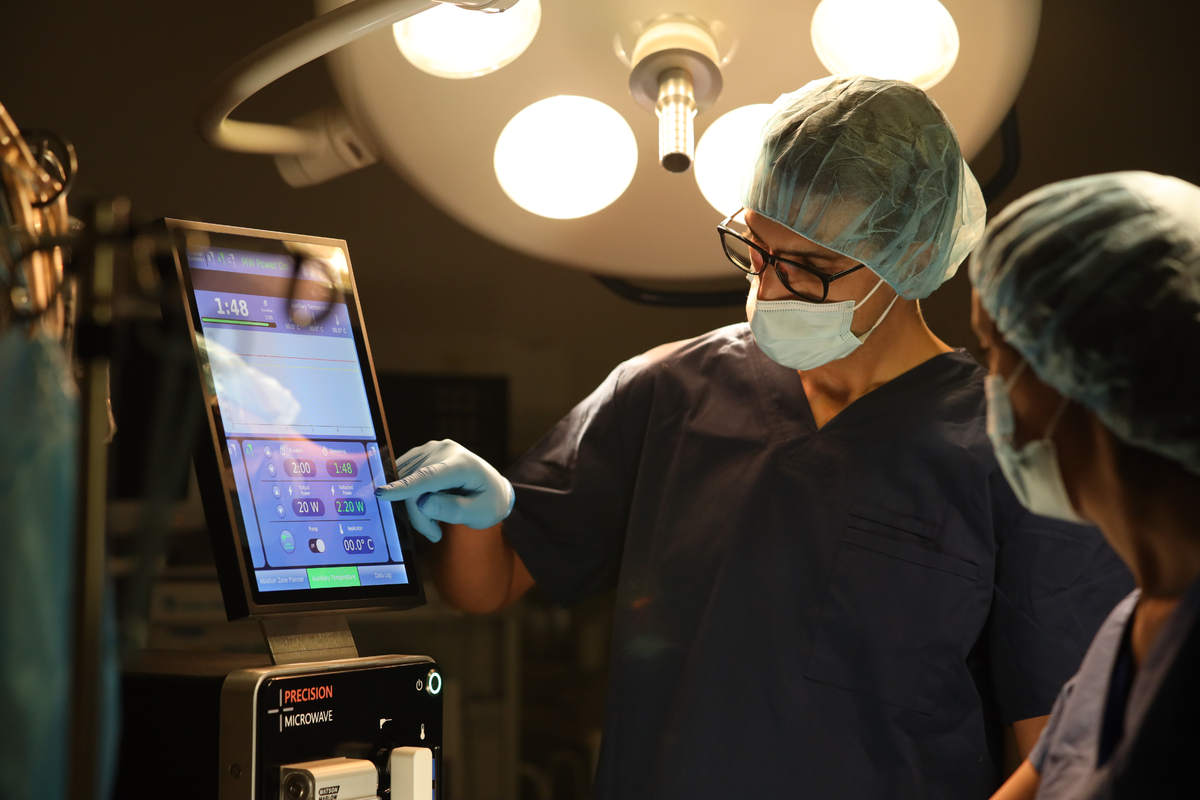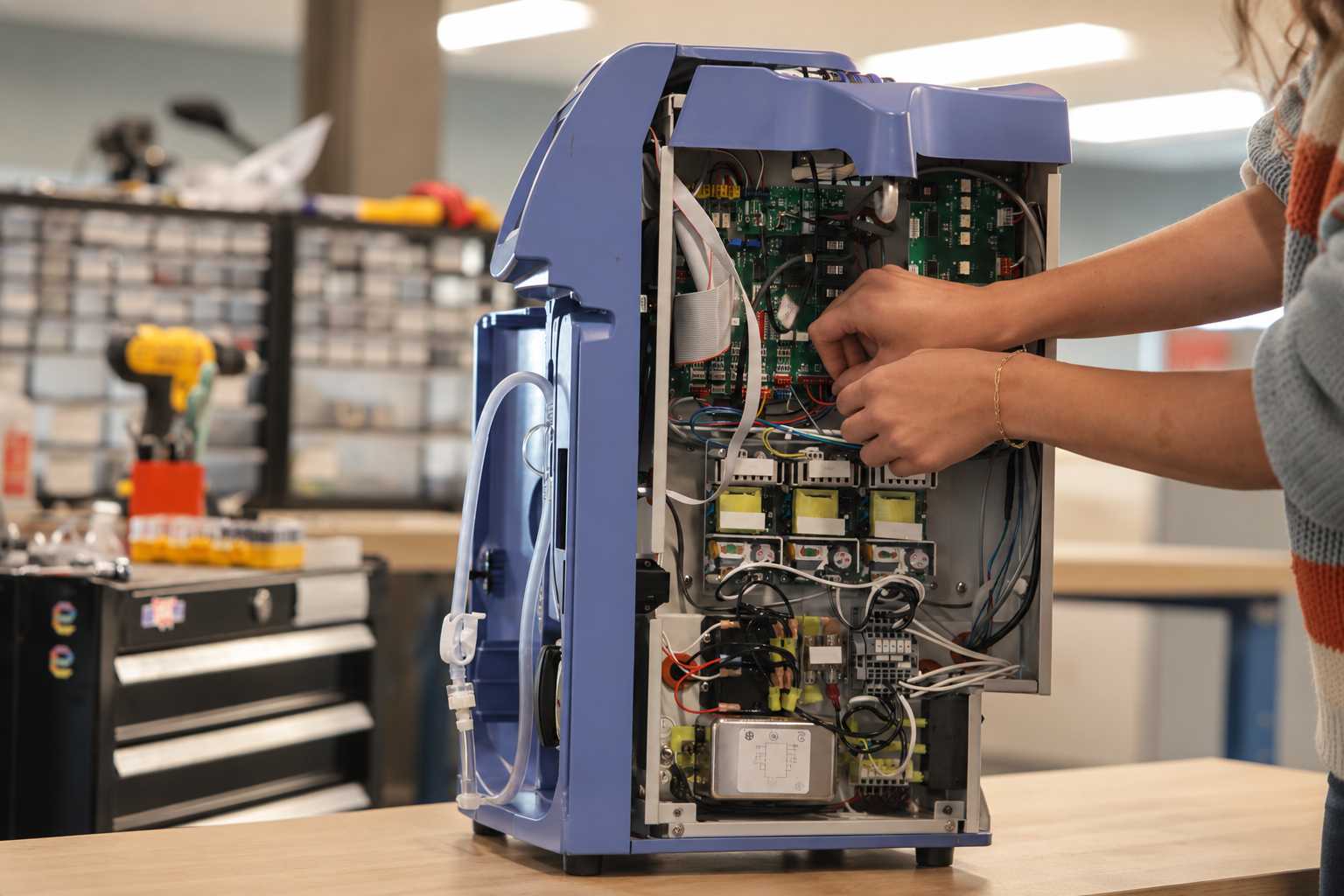
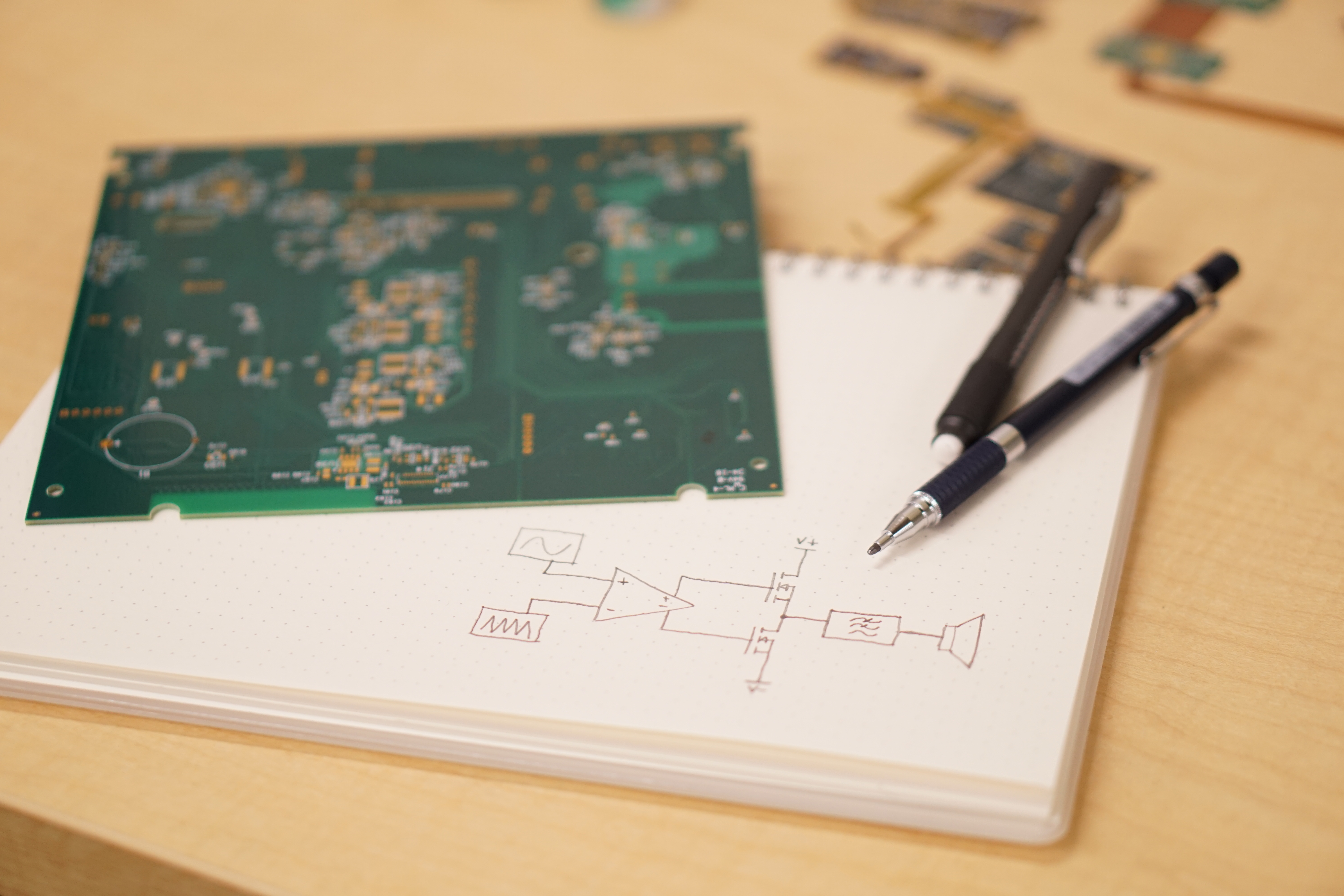
The energy levels present in pulsed field ablation (PFA) generator development environments can kill instantly. That lethality shapes how experienced development teams work, how design and test labs are structured, and the training of designers, technicians, and others who work with these systems. In this article we share how our engineers at Engenious Design approach this work safely.
Most electronics development involves hazards that are real but manageable with basic precautions. A 24 V power supply can deliver a modest shock. A 120 V bench supply demands respect. These risks are commonly understood by engineers and designers. At these energy levels, shocks can be lethal but are often survivable.
PFA generators operate on an entirely different level. Output voltages of 1,000 to 5,000 V are typical. Instantaneous power levels of hundreds of kilowatts are routine. The capacitor banks that make those pulse levels possible store energy that discharges faster than the human nervous system can respond. Contact with a fully charged high-voltage PFA energy-storage system can cause catastrophic injury or death before a person has time to react.
Lab access and protocol. Not everyone who works in an electronics lab is qualified to work with high-voltage PFA development systems. Access to high-voltage test setups should be treated as a privilege that requires demonstrated competency, not just seniority or general engineering experience. That means explicit training, retraining, documented procedures, and a culture where asking “is this discharged?” is the norm.
Instrumentation selection. A standard 10:1 oscilloscope probe is not appropriate for measuring signals in a PFA generator. The combination of high-voltage, fast edges, and high-frequency content exceeds the ratings of general-purpose probes and creates measurement hazards to the engineer and to the instruments. High-voltage differential probes rated for the voltages are required, and probe ratings should be verified before any measurement is taken on a live system. The instrumentation is part of the safety system, not just the measurement system.
Stored energy management. The most dangerous moment in PFA development is often not during operation. It is during the time after operation, when the system appears off but high-energy capacitors remain charged. Any system that has been energized should be treated as carrying a lethal charge, until a discharge procedure has been completed and verified. That means active discharge circuits with status indication, and a consistent practice of verifying discharge state before any physical interaction with the hardware. “It should be discharged by now” is not an acceptable verification method.
The buddy system for high-voltage work. When working with systems at PFA voltage levels, working alone is not an option. The justification is straightforward: if something goes wrong, someone must be present who can summon help and who is not themselves incapacitated.
Physical lab layout. High-voltage development areas should be physically separated from general work areas and not positioned in walkways. Access points should be marked and barriers used during energized testing. In a busy development environment, someone who is not thinking about high-voltage hazards or who is touring the lab can walk into a dangerous situation. Physical separation, signage, and barriers are important controls.
When it comes to safety, procedures matter, but culture matters more. A team that genuinely internalizes the hazards is more likely to take a thoughtful approach to the work.
PFA—Pulsed Field Ablation. A therapeutic technique that uses high-voltage electrical pulses to destroy targeted tissue through irreversible electroporation as opposed to thermal energy.
PEF—Pulsed Electric Field. The broader technology category; PFA is a clinical application of PEF. The terms are sometimes used interchangeably in medical device contexts, though PEF is the more general descriptor.
ESU—Electrosurgical Unit. A device that uses high-frequency electrical current to ablate, cut or coagulate tissue through thermal energy. ESUs are the established FDA category PFA generators are often regulated under, despite the different underlying mechanism.
RFG—Radio Frequency Generator. A generator that produces high-frequency alternating current for electrosurgical or ablation applications. RF ablation uses thermal energy to destroy tissue; often cited as the incumbent technology that PFA is positioned to improve upon in selectivity and safety profile.