You own your Intellectual Property (IP) when you work with Engenious Design. With other firms you may not own it, or even have full access to the intellectual property you paid to develop. I know about these pitfalls because we get pulled in to help clients extract themselves from bad intellectual property situations. Informed R&D leaders establish clear ownership of intellectual property early with partners, and keep their organizations away from those who may try to hold them hostage.
At Engenious, we care about intellectual property because it’s a question that comes up so often in our work designing medical devices for clients. We like talking about intellectual property because our approach (detailed below) is a competitive advantage, and an approach that immediately builds trust and lets prospective clients know what kind of people we are. R&D leaders and their organizations care because they have been harmed, or their operating freedom limited by past mistakes. Even if we don’t work together, I still want you to have clean ownership of your intellectual property because this will maximize your freedom in the future. We also care because we regularly get pulled in to help extract organizations from situations where they don’t own their intellectual property or tooling or other key aspects of their design. We can’t help but get personally-invested in what our clients are doing. So it feels like an injustice when others try to take advantage of people who we watch out for.
It’s simple: our guiding principle is that we treat clients the way we would want to be treated if we were them. But not everyone does, and some groups will try to lock up long term relationships, even when the benefits aren’t mutually-beneficial. It’s true that owning intellectual property can be profitable for a design firm like ours and there are ethical ways to do so. But we’ve seen intellectual property licensing abused more often than we’ve seen it evenly-structured.
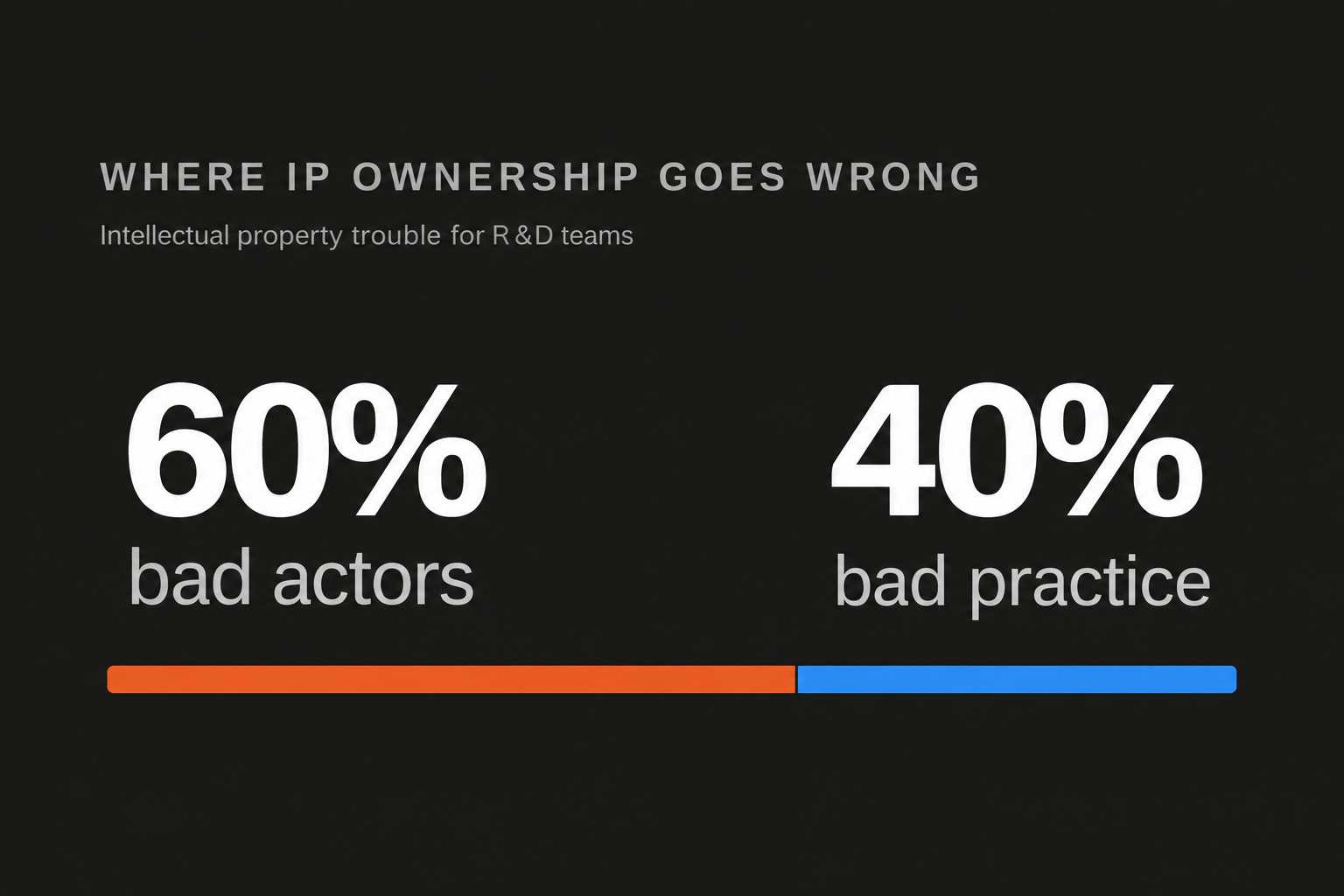
I’ve worked at design firms since 1998. Over the years, I estimate about 60% of intellectual property ownership issues are a result of bad actors who seek to lock up clients. It’s not bad to try keeping clients, but we prefer partners who do so by continuing to add value and who continue to make investments in a relationship. We steer our clients away from relationships where they pay for partnerships long after the benefits go both ways. Bottom line; if someone is trying to claim ownership of your core intellectual property, be aware of the long term implications, have clear documented exit terms and understand what freedom you are giving up.
Sometimes a lack of intellectual property ownership is unintentional. This is the other 40% of what we see when we are helping fix intellectual property situations. In these cases, the lack of intellectual property ownership results from bad business practice, and not bad actors. Bad practices take the form of sloppy document control process, or lack of care archiving source files and native CAD. We’ve recreated everything from mechanical CAD to source code to electrical schematics to printed circuit board designs in these situations. Not because there is legal trickery at play, but because the old development partner (or in-house team) is less sophisticated or less process-driven when keeping track of intellectual property. The good news is that some process discipline can help R&D team keep the intellectual property they already own and paid to develop. In the medical device industry where we operate, these good design and document control practices are also required to comply with ISO:13485, FDA and common sense.
At Engenious, we believe in symmetrical partnerships and symmetrical agreements. Meaning a legal agreement should be fair for all parties; no matter if it’s an employment agreement, a supplier agreement, or a contract with a design client. We push back when organizations try to take contractual advantage of us. We have a culture of only asking for agreement terms that we would want if we were on the receiving side. If more people and organizations followed this principle, the world would truly be a better place. My experience is that world class design firms (Engenious and our competitors) don’t seek unfair intellectual property terms. But my advice is to take care in setting up these partnerships for long term success. We share our master services agreement (MSA) early in partnership conversations so that potential clients know who we are and what we are asking for. After 13 years in business, our master services agreement has been time-tested and the intellectual property section is rarely a topic of note (because it’s fair and protective of client interests).
How to not get burned by intellectual property ownership with a design, tooling or production partner:
If you find yourself in a bad place on intellectual property ownership, know that you are in good company. Other R&D teams have extracted themselves from bad intellectual property situations. Engenious Design can help with that extraction. We can show you how we’ve done that for others. We will work with you to assess your situation and help get intellectual property back into your hands with the least friction possible. Sometimes this is a negotiation with previous suppliers. Other times it’s about recreating designs or replacing designs with ones you own.
If you’re unsure what intellectual property or design files you have access to, contact Engenious Design to talk through your situation.